
??
Transforming Communities with Missional Investors

By Katherine House
Relevance. It’s been a popular topic in chamber circles in recent years. How can chambers of commerce remain relevant when businesses no longer join because “it’s the right thing to do?” How can chambers meet the needs of their members while also demonstrating the catalytic leadership necessary to compel major employers to invest in your long-range vision for the community?
For some chambers, the answer comes by moving into “bolder work” that helps transform their communities in areas such as talent development and inclusive economies, said Christy Gillenwater, CCE, IOM, president & CEO of the Chattanooga Area Chamber of Commerce in Tennessee, and a member of ACCE’s board of directors.
That can require, among other things, the acquisition of expert staff members. “Increasingly, we’re not able to do everything we need to do for our communities through member dues and sponsorships,” said Adrian Cain, chief development officer for the Charleston Metro Chamber of Commerce in South Carolina, who is also an ACCE board member.
To fund such work, chambers are turning to missional investors. Simply put, these investors invest because they believe the chamber is working to address its community’s greatest challenges. This work typically involves long-arc community issues, such as workforce, community health, transportation, economic mobility and diversity and inclusion. By its nature, it requires strong community partnerships. Missional investors will want to know who your partners are; they may even suggest or facilitate potential partnerships.
It’s essential to understand that missional investors give “not for what they get, but for what gets done,” explains Cain. They don’t simply provide funding; they help chambers establish the mission and goals needed to assess progress. “They are very connected to work that they feel they made possible,” said Cain.
To recruit missional investors, chambers must first determine what potential investors feel passionate about changing or improving community-wide and how their interests are aligned with those changes. It’s critical in the initial stages, Cain said, to have conversations with detractors of the chamber as well as ardent supporters.
Every community has a “unique set of stresses, struggles and areas for improvement,” said Cain. To determine areas to focus on, Gillenwater suggested asking potential investors three questions:
- What are the top three things that are most concerning to you about our community?
- What top three things need to happen to advance community prosperity?
- What gaps exist in the community that we can potentially help with?

In many cases, chamber executives already know what these issues are, said Cain, but they must seek input from would-be investors on the best ways to move the needle.
For example, barriers to affordable housing vary from place-to-place. In one community, expanding affordable housing might necessitate increasing advocacy at the local level to change density regulations. In another locale, it may be more important to fund land acquisition for affordable housing units.
Seeking missional investors also “creates an onus on chambers to be more metric-based,” said Cain. Investors want to see results, and those results must be measured in terms meaningful to the people who are underwriting that work.
At the Chattanooga Chamber, Gillenwater and her colleagues use more than two dozen metrics to measure their goals. For example, as part of its talent platform, the chamber tracks the number of companies offering apprenticeships, internships and co-op opportunities since data show that work-based learning programs offer more matches for future employers.
Just as publicly traded companies offer reports to investors, chambers must regularly update missional investors on their progress. “Missional investors need quarterly communication and annual updates,” said Gillenwater. “They want touch. And they want time with other missional investors.”
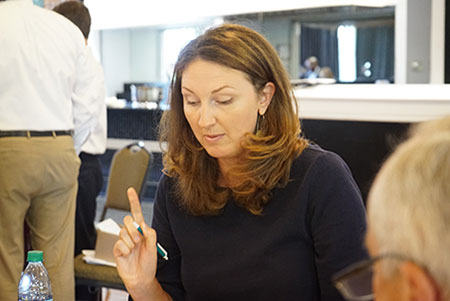
Working with Missional Investors
“Not everyone needs to be an investor,” said Cain. “And not everyone should be.” Missional investors likely are chamber members already, but not always. Gillenwater says the Chattanooga Chamber is seeking out more corporate and private foundations as part of the process because those entities’ goals are aligned with the work the chamber is doing.
Both Chattanooga and Charleston run investment campaigns to recruit missional investors, although running a campaign is not mandatory. Chambers embracing this model must engage chamber CEOs in making presentations, Cain and Gillenwater stress, because they will be targeting those in the C-suite and perhaps board members of companies or foundations.
Some Additional Tips:
- Start small. Depending on the size of your staff and board, the population of your community and whether you can afford to hire a consultant to help, you may want to focus on only one issue when getting started.
- Don’t overlook in-kind assistance.
- Refer to your prospects as investors, not donors. “They are investing in the success of the region,” said Cain.
- Be prepared for a longer sales cycle than the one for transactional investors.
- Spend time tailoring your presentation to each investor. Gillenwater suggests focusing on data, stories, and specific language that speak to that investor’s needs and how their contribution will advance a cause important to the challenges their company is facing.
- Put together small sales teams that vary depending on the prospect. A board member or campaign council member involved in the same industry cluster as a prospect may boost your chances for success. If you have a talent expert on your staff, include that person when it makes sense to.
- Be deliberate and strategic when putting together a campaign council. Simply having chamber board members or large investors on the council won’t necessarily maximize results. You’ll also want to choose people “to send a message around the kind of impact” you are making, said Gillenwater.
| Katherine House is an award-winning business writer who lives in Iowa City, Iowa. She has contributed several articles to Chamber Executive, including those about disaster recovery, the Santa Train in Appalachia, tiered dues structures and a charter school in Louisiana. |
Additional Resources:
 |
Featuring:Adrian Cain, Chief Development Officer, Charleston Metro Chamber of Commerce Tina Wirth, Senior Vice President of Talent Advancement, Charleston Metro Chamber of Commerce |
|
|
Featuring:Doug and Bill Holman, Partners, Holman Brothers Membership Sales Solutions Christy Gillenwater, CCE, President & CEO, Chattanooga Area Chamber Kristofer T. Johnson, IOM, President & CEO, Association of Washington Business Michael S. Neal, CCE, President & CEO, Tulsa Regional Chamber |
??